<?xml version="1.0" encoding="utf-8"?><feed xmlns="http://www.w3.org/2005/Atom" ><generator uri="https://jekyllrb.com/" version="3.10.0">Jekyll</generator><link href="https://www.johngerace.com/feed.xml" rel="self" type="application/atom+xml" /><link href="https://www.johngerace.com/" rel="alternate" type="text/html" /><updated>2026-06-29T20:54:22+00:00</updated><id>https://www.johngerace.com/feed.xml</id><title type="html">John Gerace</title><subtitle>Irregular dispatches on software, writing, and the quiet disasters of making things.</subtitle><author><name>John Gerace</name></author><entry><title type="html">Hacking my brain so I don’t always feel like a waste of life</title><link href="https://www.johngerace.com/writing/compulsion-to-make-stuff/" rel="alternate" type="text/html" title="Hacking my brain so I don’t always feel like a waste of life" /><published>2026-06-29T00:00:00+00:00</published><updated>2026-06-29T00:00:00+00:00</updated><id>https://www.johngerace.com/writing/compulsion-to-make-stuff</id><content type="html" xml:base="https://www.johngerace.com/writing/compulsion-to-make-stuff/"><![CDATA[<p>I have a compulsion to make stuff. Doesn’t really matter what it is: written work, paintings, software, food, I don’t care. I just have to make <em>something</em> as long as I enjoy the process and the end product is something I can look at after the fact and say “I made this.” I love playing music, but that wouldn’t scratch the itch. <em>Composing</em> music would.</p>

<p>My go-to is writing, mainly fiction. I went to grad school for this, but I also translate Spanish fiction to English. To a lesser degree, I write stuff that sometimes makes it to this website<label for="mn-1" class="mn-toggle" aria-label="Show note: For better or worse...">†</label><input type="checkbox" id="mn-1" class="mn-toggle-input" aria-hidden="true" /><span class="mn" role="note">For better or worse…</span>, but I also keep daily and monthly journals that I share with no one. In the past couple years I’ve gotten into ink and watercolor art<label for="mn-2" class="mn-toggle" aria-label="Show note: I am endlessly fascinated by the idea of...">†</label><input type="checkbox" id="mn-2" class="mn-toggle-input" aria-hidden="true" /><span class="mn" role="note">I am endlessly fascinated by the idea of illustrated journals and urban sketching.</span> It’s an endless rotation of mediums that masquerades as a penchant to accumulate hobbies.</p>

<p>It’s also how I sustain my projects for the long-term.</p>

<p>I’m not the type of person who can obsess over a single thing until it’s done. I get so dang <em>bored</em> after months of the same thing and I drift off more and more each day into rabbit holes on Reddit and Wikipedia in which I suddenly come-to and I’ve written only half a sentence<label for="mn-3" class="mn-toggle" aria-label="Show note: Sometimes a novel really _is_ written one word...">†</label><input type="checkbox" id="mn-3" class="mn-toggle-input" aria-hidden="true" /><span class="mn" role="note">Sometimes a novel really <em>is</em> written one word at a time.</span>.</p>

<p>Having multiple hobbies changes things up for the better. I get to stretch a fresh set of muscles, engage a different set of neurons, stare at a different kind of blank slate. I don’t drift as much, I have more fun, I end up doing more than I would have if I focused on just one thing.</p>

<p>I always felt guilty not having a singular focus. The world seems to reward people who get really good at something - doctors, athletes, writers, programmers, scientists, video gamers, lots of stuff - if not with money, then with attention or a note of awe<label for="mn-4" class="mn-toggle" aria-label="Show note: Fortunately for me, attention is a disincentive.">†</label><input type="checkbox" id="mn-4" class="mn-toggle-input" aria-hidden="true" /><span class="mn" role="note">Fortunately for me, attention is a disincentive.</span>. I bet we can all relate to the satisfaction of watching people on YouTube doing stuff well. My parents instilled in me during my childhood that I should always strive to be the best at whatever I do, but there can only be a handful of “the best” out of billions of people in the world. They instilled the value, but when I got into the real world I quickly realized that, actually, I’m extraordinarily mediocre at lots of stuff, even stuff I felt like I was good at. It turned out that I’m not the kind of person who’s “the best” at anything <label for="mn-5" class="mn-toggle" aria-label="Show note: Cue some Crate-And-Barrel halfwit who thinks, 'Everyone's the...">†</label><input type="checkbox" id="mn-5" class="mn-toggle-input" aria-hidden="true" /><span class="mn" role="note">Cue some Crate-And-Barrel halfwit who thinks, ‘Everyone’s the best at something,’ or, ‘You’re the best at being you.’ Shut up. You’re the best at being a doofus.</span>. Most people aren’t.</p>

<p>There are relatively few people who are truly remarkable in their chosen vocation. The rest of us have to make do with whatever the extent of our resources and abilities will permit. Most people, myself included, cannot or will not be outstanding at anything. We’ll be fine within the scope of our jobs and maybe even pretty decent at the one or two of the skill-based hobbies we have time and energy to pursue. We’ll hit a hard cap with respect to achievement, whether we know it or not. Fame or fortune will elude us. As someone who was usually near the top of the class in the microcosm of school, it was difficult to deal with not getting top marks at everything.</p>

<p>As I got older I came to feel that that’s pretty OK. The more important thing is to enjoy what I’m doing and to make things I’m proud of. But then it seems like there’s the distinct, but related, incentive (likely exacerbated by our algorithm-based world) that if you can’t be the best, at the very least you should be prolific. Tech recruiters used to pry into how many git commits you had on your personal repos<label for="mn-6" class="mn-toggle" aria-label="Show note: Which all engineers realize is a pile of...">†</label><input type="checkbox" id="mn-6" class="mn-toggle-input" aria-hidden="true" /><span class="mn" role="note">Which all engineers realize is a pile of garbage. Do those recruiters recruit on their nights and weekends? No? Then I’m sorry, I just don’t feel like you’re passionate enough to recruit me…</span>, or how many projects you had in your portfolio. The internet was gamified with likes and karma and upvotes. How many attaboys can you get? I’m now stuck with a drive to make <em>more</em> stuff that’s been difficult to shake. I still feel like a total waste if I’m not churning out lots of things. I don’t know what to do about that, but it seems like an irrational completion-oriented lizard brain impulse. My more-rational self also happened to realize that if I half-ass a whole lot of things in parallel instead of trying to whole-ass a single thing, I end up with several times more asses in the same amount of time<label for="mn-7" class="mn-toggle" aria-label="Show note: The math checks out, trust me.">†</label><input type="checkbox" id="mn-7" class="mn-toggle-input" aria-hidden="true" /><span class="mn" role="note">The math checks out, trust me.</span>. I notice more consistently the amount of stuff I make instead of realizing only in retrospect way later. There are more completion milestones and that satisfies the urge.</p>

<p>Stagnating on a short story? Translate. Bored of parsing another language? Write a webapp. Annoyed with configuring your web server? Work on a novel. Overwhelmed at the prospect of writing your novel even though you’re halfway through and still believe the premise is actually pretty good despite not having any idea where it should go? Paint a picture.</p>

<p>See? Easy squeasy!</p>

<p>This, really, is only a hack. It’s a way to assuage my anxieties, which is good enough in the shorter term, but the ultimate goal is to internalize a new perspective to eliminate the anxiety entirely. The question I try to give precedence to is not, “Did I finish something today?” but, “Did I do something worthwhile today?” Time spent <em>doing</em> and <em>enjoying</em> is the criterion I want to use to gauge whether I’m heading in the right direction. The ultimate goal now, especially as I age, is to spend a larger portion of my time with people I love and on stuff I enjoy. Keeping lots of fun ideas in the back pocket helps ensure that there’s always something I’m eager to do. And that leads to more doing. Even my lizard brain can get on board with that.</p>]]></content><author><name>John Gerace</name></author><category term="life" /><category term="writing" /><summary type="html"><![CDATA[How having lots of hobbies keeps me sane]]></summary></entry><entry><title type="html">How am I supposed to function if I can’t even make a couple eggs?</title><link href="https://www.johngerace.com/writing/strata-pan/" rel="alternate" type="text/html" title="How am I supposed to function if I can’t even make a couple eggs?" /><published>2026-04-24T00:00:00+00:00</published><updated>2026-04-24T00:00:00+00:00</updated><id>https://www.johngerace.com/writing/strata-pan</id><content type="html" xml:base="https://www.johngerace.com/writing/strata-pan/"><![CDATA[<p>Apparently everything is toxic: clothes shed microplastic, heat-printed receipts are coated in BPA, black plastic kitchen utensils might contain fire retardants<label for="mn-1" class="mn-toggle" aria-label="Show note: The paper overstated the content by a factor...">†</label><input type="checkbox" id="mn-1" class="mn-toggle-input" aria-hidden="true" /><span class="mn" role="note">The paper overstated the content by a factor of 10 and was subsequently corrected, but still!</span>, microwaving plastic tupperware leaches chemicals into food, non-stick pans are coated in who-knows-what.</p>

<p>Everything is out to kill my family!</p>

<p>We didn’t know any better in the 80s and 90s, we didn’t really seem to care in the 00s and 10s, but now the Earth is steadily heating up, cancer rates are increasing in the millennial generation, and in our current political climate, it seems like most reasonable people have gotten the message that nobody is coming to save us<label for="mn-2" class="mn-toggle" aria-label="Show note: Don't tell *me* to calm down!">†</label><input type="checkbox" id="mn-2" class="mn-toggle-input" aria-hidden="true" /><span class="mn" role="note">Don’t tell <em>me</em> to calm down!</span>. Now, people of my generation are scrambling to salvage what’s left of their health and secure the futures of their progeny as best they can.</p>

<p>We bought glass tupperware and silicone utensils<label for="mn-3" class="mn-toggle" aria-label="Show note: I impulse-bought an acacia cutting board literally this...">†</label><input type="checkbox" id="mn-3" class="mn-toggle-input" aria-hidden="true" /><span class="mn" role="note">I impulse-bought an acacia cutting board literally this past weekend.</span>. We shop with backpacks and reusable bags. We use air purifiers and buy organic when we can afford it.</p>

<p>It hasn’t been that long since avian flu jacked up the price of eggs and we all had to mortage our futures for a little breakfast<label for="mn-4" class="mn-toggle" aria-label="Show note: Y'all told us Millennials that we'd never buy...">†</label><input type="checkbox" id="mn-4" class="mn-toggle-input" aria-hidden="true" /><span class="mn" role="note">Y’all told us Millennials that we’d never buy houses because we spent all our money on Starbucks lattes and avocado toasts. Turns out a couple dozen eggs would do <em>everyone</em> in.</span>. Eggs are a staple and a comfort food. It’s an easy source of protein for kids who balk at real food and they take only minutes to make. I need them. <em>We</em> need them.</p>

<p>The Department of Health and Human Services is being run by science-flouters and conspiracy theorists. The EPA is being dismantled. Clean energy is being suppressed and the government is letting the dogs of industry shit all over our proverbial yard. Public health is in a shambles, gasoline prices are through the roof, and it feels like it’s every man for himself.</p>

<p>My home is the only place I’m remotely immune to the insanity and the only control I’ve had lately is over the food I make and I haven’t been able to fry an egg toxin-free.</p>

<p>I have no idea what coats modern non-stick pans. Maybe it’s not BPA, but it’s something and I probably don’t want to know what. Is it a big deal if I use one only for eggs? Probably not, but it’s the principle of the thing. Why should this be my best option?</p>

<p>Enter the Strata carbon steel clad pan, a 10-inch skillet with a layer of carbon steel on an aluminum base. It’s light enough that I don’t have to engage my entire core to lift it, but sturdy enough that I could still bludgeon a home intruder in a pinch<label for="mn-5" class="mn-toggle" aria-label="Show note: Dear Cooks Illustrated, please adopt this metric for...">†</label><input type="checkbox" id="mn-5" class="mn-toggle-input" aria-hidden="true" /><span class="mn" role="note">Dear Cooks Illustrated, please adopt this metric for all your cookware reviews. Thanks.</span>. This, I knew, would solve my egg problems.</p>

<p>After seasoning it and watching a couple YouTube videos about eggs specifically, I thought I had the idea, but apparently not. Disaster. Mutilated egg yolk everywhere like a bloody yellow massacre.</p>

<p>I had seasoned the pan to factory instructions, so I was sure that wasn’t the issue, but the YouTube videos didn’t quantify preheat time and temperature<label for="mn-6" class="mn-toggle" aria-label="Show note: Using a thermometer for this seems like overkill...">†</label><input type="checkbox" id="mn-6" class="mn-toggle-input" aria-hidden="true" /><span class="mn" role="note">Using a thermometer for this seems like overkill and I wasn’t about to do it, again, on principle.</span>. It took me a while to figure out the exact method on my stove and I endured weeks of ridicule from my wife, but I think I finally got it.</p>

<p>My victory celebration, I imagine, was much like that of 1783 after the Treaty of Paris. I had gained my independence from non-stick cookware! Take that, you shifty-eyed industrial oligarchs!</p>

<p>That was the last piece of non-toxic cookware I needed to figure out and now, at the expense of dozens of  I am a modern-day Buddha. If you too would like to achieve non-toxic fried egg nirvana, grab a Strata pan and follow these instructions.</p>

<ul>
  <li>Set 3-inch burner 2/3 of the way to High<label for="mn-7" class="mn-toggle" aria-label="Show note: Adjust to the size of your burner accordingly....">†</label><input type="checkbox" id="mn-7" class="mn-toggle-input" aria-hidden="true" /><span class="mn" role="note">Adjust to the size of your burner accordingly.</span></li>
  <li>Heat for 90 seconds</li>
  <li>Add oil</li>
  <li>Heat for 30 seconds</li>
  <li>Add eggs</li>
  <li>Taste enlightenment</li>
</ul>]]></content><author><name>John Gerace</name></author><category term="life" /><category term="cooking" /><category term="gear" /><summary type="html"><![CDATA[Carbon steel pans can help you to overcome the onslaught of the modern world]]></summary></entry><entry><title type="html">A nice pen and a cheap notebook are all I need</title><link href="https://www.johngerace.com/writing/nice-pen-cheap-notebook/" rel="alternate" type="text/html" title="A nice pen and a cheap notebook are all I need" /><published>2026-04-12T00:00:00+00:00</published><updated>2026-04-12T00:00:00+00:00</updated><id>https://www.johngerace.com/writing/nice-pen-cheap-notebook</id><content type="html" xml:base="https://www.johngerace.com/writing/nice-pen-cheap-notebook/"><![CDATA[<p>My sister once gave me a set of beautiful notebooks with thick, acid-free paper and lovely patterned covers. I always wanted to write in them, but never felt like I had an idea worthy enough. Whatever went in those notebooks should be a real knock-out story with deep insight, huge emotional payoff, and enough humor to kill a yak.</p>

<p>It took me years before I wrote in one of them, and the only thing I wrote was an account from a period of my life shortly after my father passed away. They languished in a box with other unused notebooks for years after.</p>

<p>That doesn’t do justice to the trees they were made from. I felt terrible about it, but I slowly set aside my anxieties and worked up the courage to write in them.</p>

<p>It was a problem of self-defeat: a writer has the perfect notebook and now needs the perfect story to write in it. No idea is even close to perfect, therefore the writer never writes in it.</p>

<p>Maybe the story should go on scrap paper salvaged from the recycling bin. But then what if it turns out to be a good idea? What if one day we sell our personal archive to Harvard and this story doesn’t survive for posterity because it’s not on acid free paper? How, then, will the scholars of the future write their dissertations if our documents have disintegrated?</p>

<p>Both of these ideas are absolutely ridiculous, and both have plagued me. I’m a defeatist with delusions of grandeur. But what about the problem of notebooks?</p>

<p>This shouldn’t even be a discussion. Use a computer, dummy. Right? It’s the obvious choice for its convenience and functionality. We live in the 21st century and there are computers literally spilling out of our pockets, mounted on our bodies. We complain that we’re overstimulated by them. Surely, we can use this to our advantage?</p>

<p>Actually, I don’t love writing on computers. I mean, it’s fine, but I do better with pen and paper. There’s something about the the deliberateness of moving a pen across a page, the connection between thought and hand, that keeps me focused on the story. It draws me in and keeps my attention. I’m less distractable if I don’t have immediate access to the entire body of human knowledge. Or video games<label for="mn-1" class="mn-toggle" aria-label="Show note: The absolute worst invention re: video games has...">†</label><input type="checkbox" id="mn-1" class="mn-toggle-input" aria-hidden="true" /><span class="mn" role="note">The absolute worst invention re: video games has been the counter that tracks the number of hours you’ve played. It’s like giving a drug addict a badge that says, “Achievement unlocked: 10,000 grams of coke snorted!”</span>.</p>

<p>Computers are a distant second place for me<label for="mn-2" class="mn-toggle" aria-label="Show note: Editing in them is WAY more convenient: less...">†</label><input type="checkbox" id="mn-2" class="mn-toggle-input" aria-hidden="true" /><span class="mn" role="note">Editing in them is WAY more convenient: less rewriting. I still feel the pain of having to write several copies of every essay by hand in grade school and a typewriter didn’t make it that much easier, only more legible.</span>. Notebooks it is.</p>

<h3 id="--one-problem-is-more-ridiculous-than-the-other--">✦   One problem is more ridiculous than the other   ✦</h3>

<p>I had two options:</p>

<ol>
  <li>Become comfortable with the fact that I’m writing bad ideas in good notebooks.</li>
  <li>Become comfortable with the fact that nobody will ever care about my personal archive.</li>
</ol>

<p>Fun fact: dozens of people visit my website every month<label for="mn-3" class="mn-toggle" aria-label="Show note: Thank you, kind reader!">†</label><input type="checkbox" id="mn-3" class="mn-toggle-input" aria-hidden="true" /><span class="mn" role="note">Thank you, kind reader!</span>, but Harvard has not yet reached out.</p>

<p>As I’ve aged, I’ve become increasingly OK with the idea that nobody cares about my work and that I will die in obscurity. And this is more a feature than a bug. It’s liberating. I can do whatever I want for the simple joy of doing it regardless of quality or completeness<label for="mn-4" class="mn-toggle" aria-label="Show note: This has always been true, but I feel...">†</label><input type="checkbox" id="mn-4" class="mn-toggle-input" aria-hidden="true" /><span class="mn" role="note">This has always been true, but I feel a neverending obligation to be “productive,” whatever that means, and I have been fighting it my entire adult life. Only recently have I started to believe I’ve been winning on this front.</span>.</p>

<p>I remind myself constantly to enjoy the process, to allow myself to enjoy the luxury of the materials I have. The only metric of quality should be the enjoyment I take from the journey.</p>

<h3 id="--composition-books-are-actually-amazing--">✦   Composition books are actually amazing   ✦</h3>

<p>The worst thing about nice notebooks is that they’re so dang expensive. Prohibitively so, if you write in volume. The expense was the easiest way to justify not buying them for myself<label for="mn-5" class="mn-toggle" aria-label="Show note: I'll gladly accept them as a gift, if...">†</label><input type="checkbox" id="mn-5" class="mn-toggle-input" aria-hidden="true" /><span class="mn" role="note">I’ll gladly accept them as a gift, if you’re wondering…</span>.</p>

<p>Instead, a $2 composition book has become my go-to. It’s easy not to be precious when you have a 200-page notebook that cost almost nothing<label for="mn-6" class="mn-toggle" aria-label="Show note: I hear there are acid-free versions for slightly...">†</label><input type="checkbox" id="mn-6" class="mn-toggle-input" aria-hidden="true" /><span class="mn" role="note">I hear there are acid-free versions for slightly more, but I haven’t looked into this yet.</span>. The B5-size paper is wide enough to give the words space to breathe, but not so wide that the line feels sprawling. Regular 8.5 x 11 and A4 both feel a bit too wide and A5 feels too narrow. B5 hits the sweet spot and it’s still compact enough that it doesn’t take up much space in a bag or backpack.</p>

<p>The lower paper quality belies the perfection of its form. It’s completely utilitarian and fit for exactly the purpose of accepting ink. In fact, the lower paper quality becomes its most inviting aspect. It’s like the Ellis Island of writing tablets — it accepts the tired, the poor, the most-huddled and tempest-tost ideas without the weight of judgment. It allows us to nurture our ideas until they’re ready to be released into the world, to stand on their own.</p>

<p>What then of the vehicle for ink?</p>

<h3 id="--luxury-can-come-in-the-form-of-eco-friendliness--">✦   Luxury can come in the form of eco-friendliness   ✦</h3>

<p>I’ve been using Bic ballpoint pens for years. They’re reliable, they don’t dry up easily, and they’re so cheap you can buy them in bulk and keep them everywhere you’d ever need one. I usually travel with two just in case. But the more I wrote over the years, the more I realized I was tossing away a good amount of plastic. These are cheap single-use pens and I felt bad about even that relatively small amount of waste.</p>

<p>Still, I wanted something more sustainable. I looked into fountain pens.</p>

<p>These things are great. They write like really juicy gel pens and you can change out the inks<label for="mn-7" class="mn-toggle" aria-label="Show note: Read: procrastinate from actually writing...">†</label><input type="checkbox" id="mn-7" class="mn-toggle-input" aria-hidden="true" /><span class="mn" role="note">Read: procrastinate from actually writing…</span>. They require a little maintenance and they can dry out, but it takes less than a minute for me to rev it up again if I haven’t used it in a few days. Once it’s working it writes smoothly and clearly with barely any pressure. My hand never aches.</p>

<p>Mine’s made of brass and has a satisfying heft compared to a Bic. I love the style and I always look forward to using it. My fountain pen is easily one of the best gifts I’ve given to myself.</p>

<p>It did cost about $45, which I blanched at initially, but I imagined I’d use it for the rest of my life. And what’s $45 over a lifetime, especially if I’m saving the Earth in the process, right<label for="mn-8" class="mn-toggle" aria-label="Show note: The Planeteer with the monkey: I'm pretty sure...">†</label><input type="checkbox" id="mn-8" class="mn-toggle-input" aria-hidden="true" /><span class="mn" role="note">The Planeteer with the monkey: I’m pretty sure he was the fountain pen guy.</span>?</p>

<p>I’m not inclined to feel precious about something so indestructible. Ink isn’t too expensive and a bottle lasts for an incredibly long time. The feel of the nib gliding across the paper is like a svelte figure skater to the Bic’s clunky Zamboni. It more than makes up for the composition book’s lower-quality paper.</p>

<h3 id="--by-your-powers-combined--">✦   By your powers combined…   ✦</h3>

<p>The luxurious fountain pen gets me even more psyched to write and the cheapo composition book is my low-stakes sandbox. Words flow unimpeded, quality doesn’t matter. The most important thing is to put words on the page. Everything else proceeds from there.</p>

<p>Those fancy notebooks my sister gave me? I’m enjoying the slow process of filling them up.</p>]]></content><author><name>John Gerace</name></author><category term="writing" /><category term="gear" /><summary type="html"><![CDATA[In which a writer conquers his fear of beautiful notebooks and learns to get out of his own way.]]></summary></entry><entry><title type="html">New project: The Weathered Quill</title><link href="https://www.johngerace.com/writing/project-weathered-quill/" rel="alternate" type="text/html" title="New project: The Weathered Quill" /><published>2026-04-03T00:00:00+00:00</published><updated>2026-04-03T00:00:00+00:00</updated><id>https://www.johngerace.com/writing/project-weathered-quill</id><content type="html" xml:base="https://www.johngerace.com/writing/project-weathered-quill/"><![CDATA[<p>In the lean months of 2024, when I was unemployed and companies declined to acknowledge my existence, I couldn’t concentrate on writing. I wanted to. I tried. I even made some occasional progress on my novel <label for="mn-pool" class="mn-toggle" aria-label="Show note: Often at the neighborhood pool with a cup...">†</label><input type="checkbox" id="mn-pool" class="mn-toggle-input" aria-hidden="true" /><span class="mn" role="note">Often at the neighborhood pool with a cup of iced coffee. Dark days, indeed…</span>.</p>

<h3 id="--the-art-of-procrastination--">✦   The Art of Procrastination   ✦</h3>

<p>I felt obliged to practice for job interviews, but hated the idea of practicing for job interviews <label for="mn-leetcode" class="mn-toggle" aria-label="Show note: Leetcode questions are a corporate anti-pattern and you...">†</label><input type="checkbox" id="mn-leetcode" class="mn-toggle-input" aria-hidden="true" /><span class="mn" role="note">Leetcode questions are a corporate anti-pattern and you shouldn’t work for people that ask them, if you can help it. I’m guilty of being this person long ago, but I swear I’m better now.</span>. If I couldn’t write fiction, then I figured I would craft a piece of software for my fiction-writing self. It turned out to be a Django API without a front end that would return a collection words or phrases in a JSON payload. Any time I wanted to do a writing exercise, I’d spin up Docker and hit the API in a browser.</p>

<h3 id="--a-gift-to-myself--">✦   A Gift to Myself   ✦</h3>

<p>Writing prompts are often overly-specific to the point of sterility (Sidenote: A tornado is about to strike a farmhouse and the owner just received a letter from their estranged mother. Write what happens next!). I prefer a combinatorial approach that places categories of random words in association with each other <label for="mn-midnight" class="mn-toggle" aria-label="Show note: [nycmidnight.com](https://www.nycmidnight.com) does this well. They have wonderfully evocative...">†</label><input type="checkbox" id="mn-midnight" class="mn-toggle-input" aria-hidden="true" /><span class="mn" role="note"><a href="https://www.nycmidnight.com">nycmidnight.com</a> does this well. They have wonderfully evocative word banks.</span>. This way, the prompt isn’t <em>prescribing</em> a scenario, but allowing for the random association to <em>evoke</em> a scenario via an emotion or an image. It’s unpredictable and the number of combinations allows for way more possible prompts than I could write by crafting them one at a time.</p>

<p>I decided to beef up that time-waster of an app and make it freely available to any creative soul that could use a little inspiration. Forever will it be a work in progress, but hey, aren’t we all?</p>

<p><a href="https://www.weatheredquill.com">Visit The Weathered Quill</a></p>]]></content><author><name>John Gerace</name></author><category term="software" /><category term="art" /><category term="projects" /><category term="tech" /><category term="writing" /><summary type="html"><![CDATA[The introduction of a new app for generating creative writing prompts]]></summary></entry><entry><title type="html">Tech and Literature: Being of Two Worlds in the Age of AI</title><link href="https://www.johngerace.com/writing/tech-literature-and-ai/" rel="alternate" type="text/html" title="Tech and Literature: Being of Two Worlds in the Age of AI" /><published>2026-04-03T00:00:00+00:00</published><updated>2026-04-03T00:00:00+00:00</updated><id>https://www.johngerace.com/writing/tech-literature-and-ai</id><content type="html" xml:base="https://www.johngerace.com/writing/tech-literature-and-ai/"><![CDATA[<p>I should be wracked by internal conflict. As a software engineer by profession, I have been given a mandate to use AI. Regardless of whether AI is scuttling the careers of junior engineers, or whether we’re in a bubble to rival that of the dotcom boom of the late 90s, there is nowhere I could ply my trade that would permit me NOT to use it.</p>

<p>As a writer by vocation, I refuse to use AI to write for me. The thought of removing myself from the process of putting word to page makes me queasy. Even if the outcome was a decent paycheck from Amazon sales <label for="mn-1" class="mn-toggle" aria-label="Show note: $0 earned thus far.">†</label><input type="checkbox" id="mn-1" class="mn-toggle-input" aria-hidden="true" /><span class="mn" role="note">$0 earned thus far.</span> for a week’s worth of AI hackery, I cannot bring myself to embrace AI writing.</p>

<p>Even though I reside in both technical and artistic provinces, each with vastly different relationships to the technology, I maintain a strict delineation regarding acceptable AI use: AI does the tedious work; it does not do the meaningful work. Caveat lector: the definitions of “tedious” and “meaningful” are tied only to my own ambitions and interests.</p>

<p>There is, in fact, a precedent to this relationship in the technical world.</p>

<h3 id="--ai-does-what-tech-workers-have-been-doing-for-time-immemorial--">✦   AI does what tech workers have been doing for time immemorial   ✦</h3>

<p>Anyone who’s ever built a web site has ripped off HTML from another site. Copy/paste, boom: scrolling marquee! Tiled background! Alert popup! It’s a rite of passage. It’s how we learned. You would be hard-pressed to find any software engineer who a) hasn’t done this and b) isn’t thankful to their predecessors for the opportunity.</p>

<p>All proprietary enterprise products for the largest companies in the world use open-source software, either off the shelf or heavily modified. It costs nothing, no credit is given! There are often license restrictions, but these usually don’t prevent anyone from taking the code and using it to make a monetizable product.</p>

<p>Tech has had an enduring culture of sharing, so it’s not a surprise that AI use is acceptable and encouraged, even if it’s been trained on other people’s code. Most of that code was offered freely as part of this culture.</p>

<p>For my personal projects, I find AI liberating. It enables me to write software I otherwise wouldn’t have been able to write. I’m a terrible UI designer. Despite years of attempts, I haven’t managed to cultivate the skill. AI, however, has become a front end collaborator that can create more-than-serviceable UI for my projects that have either languished in a half-completed state, or those I was simply too embarrassed to show off.</p>

<p>AI augments my 20+ years of professional experience. It’s a coworker, not a surrogate.</p>

<p>It’s important to note that even though I haven’t written all the code by hand, there’s no point at which I’m absolved of the responsibility of knowing what I’m doing. I’m 100% responsible for the output - its correctness, its look and feel, its shortcomings. I’m responsible if paying customers do not have the experience to which they’re entitled. There’s no substitute for professional experience and human presence. <em>Someone</em>, a human representative, has to own the output. Someone at some point, maybe several layoffs prior, told an AI agent what to build, and no matter what, there needs to be a human in charge, even if it’s the know-nothing CEO.</p>

<h3 id="--ai-shouldnt-do-the-fun-stuff--">✦   AI shouldn’t do the fun stuff   ✦</h3>

<p>AI models didn’t get to be as capable as they are without a ton of training material. There’s no shortage of news stories about the lack of ethics at AI companies as they eagerly pirated copyrighted work to use in their corpus <label for="mn-2" class="mn-toggle" aria-label="Show note: And now Anthropic [scrambles](https://www.theguardian.com/technology/2026/apr/01/anthropic-claudes-code-leaks-ai) to thwart copyright issues...">†</label><input type="checkbox" id="mn-2" class="mn-toggle-input" aria-hidden="true" /><span class="mn" role="note">And now Anthropic <a href="https://www.theguardian.com/technology/2026/apr/01/anthropic-claudes-code-leaks-ai">scrambles</a> to thwart copyright issues on code they accidentally leaked? The universe does have a sense of humor!</span>. Software code is, in large part, available and reuse is acceptable. It’s NOT legal to use software against its license, work is still copyrightable, and IP law still applies, but the ethics seem to apply less to snippets of code than they do the final products themselves <label for="mn-3" class="mn-toggle" aria-label="Show note: I am emphatically not a lawyer.">†</label><input type="checkbox" id="mn-3" class="mn-toggle-input" aria-hidden="true" /><span class="mn" role="note">I am emphatically not a lawyer.</span>.</p>

<p>When these models are tasked with writing in the style of a specific author, it’s as if the author’s entire business, even their identity, is being hijacked. The IP is their work, their voice, their perspective. That these models were trained on an author’s body of work feels like an attempt to supplant them in the same way that creating a social network called Facebook with Likes and Friends and Pokes and all that would be infringement.</p>

<p>Even if AI tools are writing without explicit instructions to impersonate, authors haven’t opted into this relationship willingly. There was no pre-existing culture of sharing as there was in the software community.</p>

<p>It should go without saying that of course I don’t want anyone to impersonate me. Training ethics and fair use aside, as an artist I don’t want the robots to make art. <em>I</em> want to make the art. I want it to take a long time. I want to struggle with the creative process.</p>

<p>Software is more about the end product for me. It satisfies a functional desire. Not so with writing. The process is the thing. The output is a byproduct of the process and a reflection of the author. It says <em>something</em> about the person who made it whereas most software doesn’t. <label for="mn-4" class="mn-toggle" aria-label="Show note: Cue someone chiming in with 'Software can be...">†</label><input type="checkbox" id="mn-4" class="mn-toggle-input" aria-hidden="true" /><span class="mn" role="note">Cue someone chiming in with ‘Software can be art!’ and I agree, but mostly, for me, it’s functional.</span> When we think of Google’s products, aesthetics, commentary, metaphor, evocation of ideas aren’t the first things that come to mind. That’s not the company’s <em>raison d’etre</em>.</p>

<p>Far be it from me to yuck your yum if you want to read the stuff that AI agents write <label for="mn-5" class="mn-toggle" aria-label="Show note: I will remain a silent judge in this...">†</label><input type="checkbox" id="mn-5" class="mn-toggle-input" aria-hidden="true" /><span class="mn" role="note">I will remain a silent judge in this regard.</span>. I want to read books by people so I can experience the joy in the mutual recognition of quirky observations about life! It’s cool if a robot makes an interesting observation, and it doesn’t make the observation any less true, but it’s not <em>special</em>. It’s not a shared experience. Something is lost in the interaction.</p>

<p>The artist in me objects to the tool because writing is fun, even if talent eludes me. Art is for me! Robots should do my laundry, wash my dishes, clean my house, relieve me of the toil in my life so I can self actualize, or at least do a puzzle.</p>

<h3 id="--i-certainly-didnt-ask-for-this--">✦   I certainly didn’t ask for this   ✦</h3>

<p>I’m not going to argue about the ethics of how AI models are trained. By now that matter has been adjudicated to death and the news cycles have turned over and AI companies have grown so large and influential that their technology is being shoved down our gullets by money-grubbing CEOs holding our careers hostage. It was created unethically <em>and</em> it’s here to stay. The systemic issue has become a quagmire that we’ll all have to navigate over the long term.</p>

<p>The only way I could see myself breaking out of the sphere of influence is if I became a turnip farmer in the Yukon wastelands, and I would love nothing more, but I have kids and I doubt the school districts are any good.</p>

<p>The best I can manage is begrudging acceptance. The road will be long, and I’m still bitter about the idea that I need a smart phone.</p>]]></content><author><name>John Gerace</name></author><category term="writing" /><category term="tech" /><category term="life" /><category term="ai" /><summary type="html"><![CDATA[What it means for a writer and software engineer to both love and hate AI.]]></summary></entry><entry><title type="html">New project: The Interactive Orrery</title><link href="https://www.johngerace.com/writing/project-orrery/" rel="alternate" type="text/html" title="New project: The Interactive Orrery" /><published>2026-02-22T00:00:00+00:00</published><updated>2026-02-22T00:00:00+00:00</updated><id>https://www.johngerace.com/writing/project-orrery</id><content type="html" xml:base="https://www.johngerace.com/writing/project-orrery/"><![CDATA[<p><img src="https://www.johngerace.com/assets/images/project-orrery.png" alt="Screenshot of the interactive orrery" class="align-center" /></p>

<p class="text-center"><a href="https://www.johngerace.com/orrery/">See the orrery!</a></p>

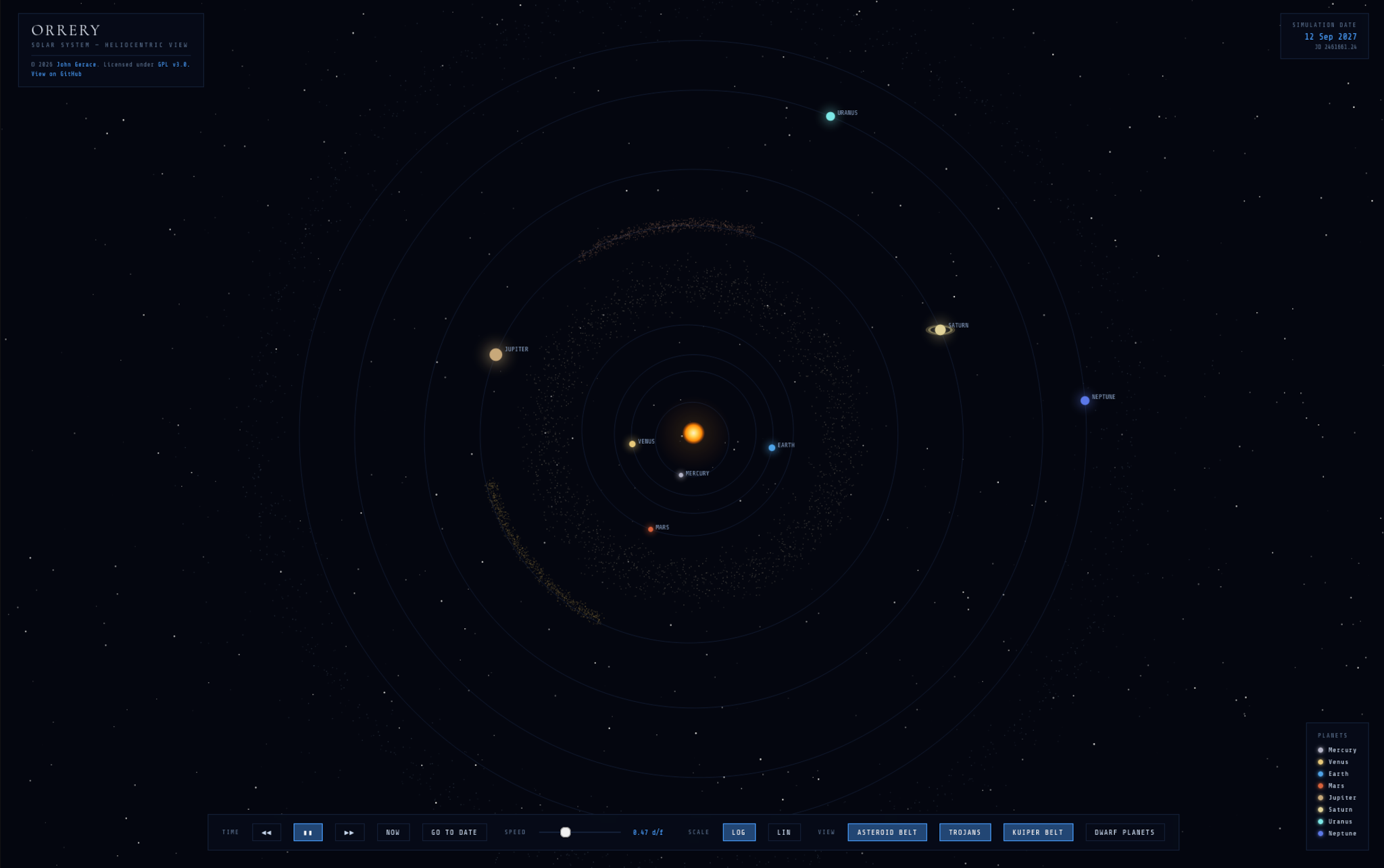
<p>I’ve always wanted to build an orrery. One of those geared-up mechanical ones, especially, but that’s beyond my current ability to do, so I figured I’d build a digital one, which is more in line with my skill set.</p>

<p>Currently included:</p>

<ul>
  <li>The eight major planets</li>
  <li>Dwarf planets</li>
  <li>The asteroid belt</li>
  <li>The Kuiper belt</li>
  <li>The Jupiter trojan asteroids.</li>
</ul>

<p>You can toggle between a logarithmic view, which will display things a little more densely, and a linear view, which is better for showing the really eccentric orbits of some of the dwarf planets, but it makes the Kuiper belt objects difficult to see.</p>

<p>I plan to modify this over time to add more objects like some notable comets, the scattered disc, moons, and the Sednoids.</p>

<h3 id="--implementation--">✦   Implementation   ✦</h3>

<p>Claude Sonnet 4.5 assisted with the orbital equations and pointed me at the right data references. It seems to have done pretty well in this regard as far as I can tell, but I’m looking forward to learning more about the math and really grokking it.</p>]]></content><author><name>John Gerace</name></author><category term="software" /><category term="art" /><category term="projects" /><category term="tech" /><summary type="html"><![CDATA[A mesmerizing look at the cosmos!]]></summary></entry><entry><title type="html">I Don’t Want To Meet My Heroes</title><link href="https://www.johngerace.com/writing/i-dont-want-to-meet-my-heroes/" rel="alternate" type="text/html" title="I Don’t Want To Meet My Heroes" /><published>2026-01-24T00:00:00+00:00</published><updated>2026-01-24T00:00:00+00:00</updated><id>https://www.johngerace.com/writing/i-dont-want-to-meet-my-heroes</id><content type="html" xml:base="https://www.johngerace.com/writing/i-dont-want-to-meet-my-heroes/"><![CDATA[<p>I’ve had the opportunity over the years to meet some famous people I really admired, mostly writers of some sort at readings or conventions or just in the course of grad school. In some ways it’s a really neat experience because they become more humanized, actual people instead of the god-tier art monsters of my imagination. Their kids text them at inappropriate times, they tell the same story over and over <label for="mn-1" class="mn-toggle" aria-label="Show note: Sorry, no names...">†</label><input type="checkbox" id="mn-1" class="mn-toggle-input" aria-hidden="true" /><span class="mn" role="note">Sorry, no names…</span>, <em>and</em> they’re internationally renowned geniuses. Talk to them about art, though, and it’s a little tough to keep pace.</p>

<p>Conversations with them tend to be a pile of awkwardness, and I can totally handle that. I’ve been awkward my whole life, intentionally or not, but I’m not always the problem and I’m willing to bet that there are tons of awkward interactions at meet-and-greets that don’t involve me <label for="mn-2" class="mn-toggle" aria-label="Show note: I bet they don't all make it to...">†</label><input type="checkbox" id="mn-2" class="mn-toggle-input" aria-hidden="true" /><span class="mn" role="note">I bet they don’t all make it to a personal website either. Does this make it more awkward or less? Oh jeez, I’m doing it again, aren’t I?</span>.</p>

<p>Awkwardness alone isn’t enough to put me off introductions with talented people. You know what is? Assholery.</p>

<h3 id="--hello-crickets-goodbye--">✦   Hello, <em>*crickets*</em>, goodbye   ✦</h3>

<p>I don’t like small talk. I imagine few people do. Either way, I never know what to say <label for="mn-3" class="mn-toggle" aria-label="Show note: I'm old enough now that I don't feel...">†</label><input type="checkbox" id="mn-3" class="mn-toggle-input" aria-hidden="true" /><span class="mn" role="note">I’m old enough now that I don’t feel obliged to talk to people. I just don’t want anyone to feel weird or offended if I’m just there, existing, in close proximity.</span> when I meet anyone, let alone genius-level artists. I’ve told Cesar Aira how much I admired reading and translating his work, but his English isn’t great and my spoken Spanish is awful. I don’t know that he really understood what I was talking about so I felt kind of stupid not being able to communicate in the moment. He was kind enough to sign a couple of books for me and nod and all that.</p>

<p>I had a similar experience when I met Grant Morrison at an NY Comic Con signing event. I don’t know if he still does this, but he used to spend tons of time with fans during signings so if you had something to say he was more than happy to chat. His generosity was notable given how famous he was already <label for="mn-4" class="mn-toggle" aria-label="Show note: It also made the wait notably longer.">†</label><input type="checkbox" id="mn-4" class="mn-toggle-input" aria-hidden="true" /><span class="mn" role="note">It also made the wait notably longer.</span>. He’s a comic book savant and you could have a really deep conversation with him if you were immersed in that world, but I don’t speak Comic Book. So when I met him I didn’t have much to say other than that I enjoyed his work. He signed a few books, I said thank you, and went on my way.</p>

<h3 id="--thatll-be-3-and-your-dignity-please--">✦   That’ll be $3 and your dignity, please   ✦</h3>

<p>At that same NY Comic Con, I met a really well-known sci-fi author whose books I’d been reading since I was in middle school. He’s written well over 100 novels, been on bestseller lists dozens of times, and had made quite a career for himself by then. He had his own large booth with his books laid in stacks around four sides worth of tables with a 10-foot-tall publisher banner in the middle. He was there with his wife and his assistant.</p>

<p>No other fans were at the table, which I found strange since he’s written books for a few large franchises that have garnered him multi-million dollar book deals, so he and his wife were just hanging out and chatting behind his life’s work. His assistant ran interference when I approached the table and started telling me about his career and his recent work, and that was all well and good, but I actually did have something I wanted to say to the writer.</p>

<p>I wanted to thank him for being one of my sources of inspiration over the years that ultimately led me to want to write. All the joy his books had given me was the sort of thing I wanted my writing to be for other people. The assistant said he’d autograph any book I bought, so I picked out a novel, a relatively inexpensive mass market paperback, a standalone story I hadn’t yet read. This got the attention of the writer. He and his wife stood to chat with me. He started pointing out which of his books he liked best and asked me what I liked to read. I gave him a couple examples and he grabbed a special edition hardcover of a novel he’d co-written with another famous person I was familiar with. I’m not an idiot and I saw this for the upsell it was, but the book did seem interesting and there were some cool illustrations, so I said to myself, “how often do you get to meet a writer with this kind of status and thank him for his work and come away with a nice autographed copy of a book you might really enjoy?”</p>

<p>I sprang for the hardcover.</p>

<p>When the assistant rang me up he asked if I wanted it autographed. Sure, yeah, why not. The assistant said, “That’ll be $3 extra.”</p>

<p>‘Scuse me? I’m paying $30 for a book, Grant Morrison is doing autographs for free with a line around the center of the room and this guy’s nickel-and-diming me for an autograph that his assistant made me think would be included with the purchase? Like I said, I’m not an idiot, but I am a sucker. I thought to myself, “this is going to be the worst kind of story I get to tell for the rest of my life,” so I paid the $3.</p>

<p>I still wanted to thank him for his work, so I did, and I felt a genuine sense of gratitude in that moment despite the weird commercial interaction, but he didn’t really acknowledge me and just kind of waved me away and went back to chatting with his wife.</p>

<p>That was that. Awkward and disappointing.</p>

<p>He was enough of an ass that I don’t read his work anymore and that $33 autographed hard cover is sitting unread on my shelf to this day. It now serves as a potent reminder not to be like that guy.</p>

<h3 id="--expectation-vs-reality--">✦   Expectation vs Reality   ✦</h3>

<p>What did I want from these encounters anyway?</p>

<p>Really, I just wanted a cordial interaction. I like thanking artists. Art is a thankless job and it’s nice to know one’s work is appreciated. Ask me how I know…</p>

<p>I really don’t care about autographs, special editions, collectibles, or whatever. I’d ideally come away with an additive experience, something that makes my relationship with the artist’s work a little more personal, but artists are under no obligation to provide that for anyone at any point.</p>

<h3 id="--ill-stick-with-my-illusions-thanks--">✦   I’ll stick with my illusions, thanks   ✦</h3>

<p>I draw way more inspiration from the images of writers I’ve conjured in my head based on the work that I’ve connected with. I don’t want anything to mar my experience of their art, whether it’s because of my idiocy or their assholery. I don’t want to damage what was already perfect enough.</p>

<p>It’s like deciding to keep an action figure in its original packaging. I know if I play with it I’m more likely to break it and lose it forever, so I’d rather admire it through the plastic.</p>]]></content><author><name>John Gerace</name></author><category term="writing" /><category term="art" /><category term="life" /><summary type="html"><![CDATA[They're people? Just like me??? Ugh...]]></summary></entry><entry><title type="html">My Thoughts on the Framework Laptop</title><link href="https://www.johngerace.com/writing/framework-laptop-review/" rel="alternate" type="text/html" title="My Thoughts on the Framework Laptop" /><published>2026-01-12T00:00:00+00:00</published><updated>2026-01-12T00:00:00+00:00</updated><id>https://www.johngerace.com/writing/framework-laptop-review</id><content type="html" xml:base="https://www.johngerace.com/writing/framework-laptop-review/"><![CDATA[<p>I’ve had my <a href="http://www.frame.work">Framework</a> laptop since November 2025, and I’ve been using it daily, but a lot of the reviews I encountered before buying it didn’t really seem to address the stuff that gets a little annoying, most of which wouldn’t have been a deal breaker, but there are a few things that really make me shake my fist angrily.</p>

<h3 id="--my-setup--">✦   My setup   ✦</h3>

<p>I use Ubuntu Linux exclusively on my laptops. At this point in its evolution it just works on pretty much any computer I’ve installed it on and the Framework is no exception. They’ve got solid support for it and it shouldn’t be an issue for anyone to set it up as long as they’re OK with installing it themselves instead of getting a laptop with an operating system already installed.</p>

<h3 id="--requirements-and-budget--">✦   Requirements and Budget   ✦</h3>

<p>My use cases are fairly limited to writing, browsing the internet, occasional coding (nothing graphic intensive), and running local LLMs. In an emergency, I also need to be able to do my coding for work on it. I’m definitely not doing anything that would require a dedicated graphics card, like gaming or video editing. Local LLMs run well enough as long as they aren’t too big and as long as you configure your machine with enough RAM, so you don’t need a graphics card even if you want to do something computationally expensive like that.</p>

<p>Given that, I thought 32gm of RAM would be more than enough, but I really wanted to have the option to upgrade in the future.</p>

<p>I wanted about 1TB of storage because of the LLMs and because I sometimes download the photos and videos from my camera while I’m on vacation. Storage was still cheap, so that didn’t break the bank.</p>

<p>My last laptop had a battery that swelled up, which was the impetus for the new computer, but it was an old Macbook Pro from 2016 and I would’ve had to get the Apple store to replace it at a likely cost of several hundred dollars, which I didn’t want to spend on a computer that was already 9 years old. I really wanted to be able to replace the battery myself in the next laptop so I could keep it for longer.</p>

<p>Budget: $1000.</p>

<h3 id="--the-competition--">✦   The competition   ✦</h3>

<p>Lenovo had some good sales for computers around $1000, but they usually had 16gb of RAM, occasionally 32gb, but they almost always had 256gb/512gb of storage. And never in a configuration in which it was 32gb RAM + 512gb storage, and definitely NEVER in a configuration where the RAM wasn’t soldered down (meaning I couldn’t upgrade it).</p>

<p>Lenovo’s configurations were cheaper than Dell’s and HP’s, but even Lenovo’s refurb site didn’t have anything that fit both my specs and my budget.</p>

<p>Framework’s 13” laptop was a decent price, but a little above my range at ~$1100, even for the DIY version (once expansion cards, storage, RAM, and charger are factored in). However, I didn’t want to spend $1000 on a laptop that didn’t have the specs I wanted because I would’ve been really salty about it.</p>

<p>After a little browsing, I determined that getting a DIY Framework laptop would be slightly cheaper than getting a Lenovo with my desired configuration, plus I waited until I could get the RAM and storage on sale, so I went with that. Unfortunately, the cheaper AMD Ryzen 7040 series processors were out of stock, so I got an AI 300 series processor, which bugged me, but oh well.</p>

<p>A note about Windows vs Linux: Contrary to popular belief, you don’t have to pay for Windows. You can download it and use it for free (legitimately!), but you won’t be able to customize things like screensavers and desktop backgrounds and stuff unless you buy a key (~$25 on Kinguin). Plus it puts a watermark on the lower right hand side of your desktop. If you want to save money and you still want Windows, just go for that. It makes the Windows vs Linux decision much less of a cost issue.</p>

<h3 id="--the-good-and-the-mediocre--">✦   The Good and The Mediocre   ✦</h3>

<p>Assembly was a breeze. The instructions were easy to understand and my 4-year-old helped me set it up. The only thing you need is a screwdriver and it’s included!</p>

<p>The chassis isn’t as sturdy as a Macbook’s, but it’s fine. It feels a little plastic-y and less rigid than a Macbook Pro. I don’t travel with it often, so it mostly lives on my desk and I carry it around the house. Not a rugged laptop, but it’s not super delicate either.</p>

<p>The fan doesn’t spin up often for my use cases except when I run local LLMs, so it’s not usually noisy, but when the fans run they aren’t much louder than my work M1 MBP’s.</p>

<p>The default 2.2k matte display is great. I hate high resolutions screens because I do not have the eyes of a falcon or the eyes of an 18-year-old. 2.2k resolution is as high def as I can go on a screen that small without scaling, and even then I have to squint occasionally. I really don’t see a world in which I would want a 2.8k display, even if it’s 120Hz.</p>

<p>The speakers are tinny, and I’m sure they’re not nearly as good as an up-to-date Macbook Pro’s, but they’re better than the ones on my iPhone 13 mini and much better than the ones on my old laptop. It’s a step forward for me.</p>

<p>The camera is fairly crappy even though the resolution is higher than what I get on my Apple M1 MBP work laptop, but I really don’t mind. It’s good enough and I don’t use it often. I love that I can disconnect the microphone and camera with a flick of a switch. It scratches a privacy-obsessed itch of mine.</p>

<p>The battery life is lower than average, I think, but sufficient for me. Like I said, it lives at home so it’s always near a plug, but I can easily get 6 - 8 hours of normal office productivity work out of it. I’ve never run it fully down, so I don’t know for sure about that number, but I’ve never had a problem. It’s not a computer you’d want to rely on if you really need solid battery life.</p>

<h3 id="--the-infuriating--">✦   The Infuriating   ✦</h3>

<p>My biggest pet peeve is the fact that the USB-A port on the front left side is buggy. It doesn’t detect my devices unless I restart the computer or reseat the expansion port. It’s a <a href="https://community.frame.work/t/tracking-fw13-amd-usb-a-expanson-card-powers-down-and-does-not-wake-up/45296">well-known problem</a> that still doesn’t have a fix, even though it seems to have been around for years. I’m not sure why Framework haven’t fixed it yet. This is the kind of thing that should count as baseline functionality, especially since swapping ports around is one of the Framework laptop’s value propositions. It’s not like USB-A is a rare thing either!</p>

<p>The four expansion ports are <a href="https://knowledgebase.frame.work/expansion-card-functionality-on-framework-laptop-13-amd-ryzen-ai-300-series-Hy5SfMRs1l">not all created equal</a>. They have different capabilities, so you have to choose where you install each card depending on what cards you buy and what you want to do with them. According to the graphic on that link the left front port is one of the ones that should be perfect for USB-A!</p>

<p>This is the kind of thing I hope they can fix in a firmware update.</p>

<p>I’m not sure if this would’ve been a deal breaker for me. By now it’s a foregone conclusion since I was past the return date by the time I discovered it. I’m fortunate enough to have a dongle I can use if I really need to plug in a thumb drive, but it’s super annoying to have to do that if I don’t want to wait for a restart.</p>

<h3 id="--a-little-pricey-but-decent--">✦   A little pricey, but decent   ✦</h3>

<p>I’d buy the Framework again if I could. I’m pretty used to fixing things on my own if I need to, so the flexibility gives me a little peace of mind. I’m going to run this thing for 10+ years if I can swing it, then I’ll replace the battery and hope to get 10 more if the company’s still around by then.</p>

<p>It would be a good computer if it had a USB-A port that just worked no matter where I plugged it in. I haven’t had any other issues or complaints aside from that, but it’s definitely an expensive computer for what I use it for. Value-wise, not amazing, but not terrible either. The performance for the money is fine. Maybe not the best out there, but it’s good enough that I don’t feel ripped off.</p>

<p>Ultimately, you pay a premium for the repairability aspect because the company is so young and maybe doesn’t have the economies of scale that larger manufacturers have. It’s an investment in their philosophy with the hopes that it’ll pay off down the line as a cheaper upgrade or repair. That feels worth the money to me.</p>

<p>I hope this helps someone in their laptop-buying decision process!</p>]]></content><author><name>John Gerace</name></author><category term="tech" /><category term="gear" /><summary type="html"><![CDATA[It's a computer!]]></summary></entry><entry><title type="html">Book Review: _Utopia Avenue_ by David Mitchell</title><link href="https://www.johngerace.com/writing/book-utopia-avenue/" rel="alternate" type="text/html" title="Book Review: _Utopia Avenue_ by David Mitchell" /><published>2025-10-05T00:00:00+00:00</published><updated>2025-10-05T00:00:00+00:00</updated><id>https://www.johngerace.com/writing/book-utopia-avenue</id><content type="html" xml:base="https://www.johngerace.com/writing/book-utopia-avenue/"><![CDATA[<p><img src="https://www.johngerace.com/assets/images/cover-utopia-avenue.png" alt="By https://www.hodder.co.uk/titles/david-mitchell-6/utopia-avenue/9781444799422/, Fair use, https://en.wikipedia.org/w/index.php?curid=64610180" class="align-center" /></p>

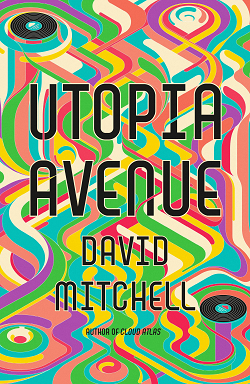
<p>David Mitchell is my favorite author, and <em>Cloud Atlas</em> is one of my favorite novels of all time. All other books are doomed to suffer in comparison.</p>

<p>Sorry, <em>Utopia Avenue</em>, you started off on the back foot.</p>

<p>The prose in this novel is so similar in feel to Mitchell’s previous work and the setting is part of the expansive Mitchellverse that weaves through each of his stories. I approached with high expectations.</p>

<p>Maybe I desired too much from it. Maybe that ultimately doomed my opinion of the book.</p>

<p>We see a familiar cast of characters throughout the novel’s substantial 550+ pages from the 1960s rock scene, but also many appearances by characters from Mitchell’s other books. I’ll try not to spoil anything here, but some of these characters are significantly more impactful to the story than others. One of the more jarring of these sends the novel careening into deep left field. I mean, like, a way-past-the-bleachers-and-into-the-parking-lot kind of thing, given where the story had taken us until that point. He does eventually pull the story back into familiar territory, but it left me to wonder if we needed that aspect of the story at all.</p>

<p>The novel reads like Mitchell’s love letter to music, about which he is clearly and intensely passionate. It’s indulgent. He writes lyrics for Utopia Avenue’s hit songs, he describes the qualities of music in glorious detail, we have delightful cameos from famous musicians both pre- and post-fame. But he’s more focused on celebrating his love for music than on developing the depth of his characters.</p>

<p>The story is a straightforward drama that plays out the biography of a band. The characters each have their own personality, their own unique persona - Elf is the hyper-talented but marginalized-because-female keyboardist, Dean is rough-edged boy from the wrong side of the tracks, Griff is the gruff and practical drummer, Jasper is the tortured artist, but everyone meshes so easily that their coming-together feels a little too perfect, a little too set-up. The band face misfortune and they persevere and emerge with their relationship intact, but I didn’t fear for their well-being or care for them at any more than a superficial level. The story never swings for the fences, except for maybe that one part I mentioned earlier, which, again, felt remarkably out of place.</p>

<p>While it’s not that good for a David Mitchell book – it’s possibly my least favorite of his – it’s fun, and even a decent book compared to the contemporary landscape. It’s entertaining and I legitimately enjoyed reading it, but it lacks the profundity that might elevate it to the level of a truly compelling story.</p>]]></content><author><name>John Gerace</name></author><category term="book review" /><category term="literature" /><summary type="html"><![CDATA[Musically palatable]]></summary></entry><entry><title type="html">Book Review: _The Tainted Cup_ by Robert Jackson Bennett</title><link href="https://www.johngerace.com/writing/book-tainted-cup/" rel="alternate" type="text/html" title="Book Review: _The Tainted Cup_ by Robert Jackson Bennett" /><published>2025-09-21T00:00:00+00:00</published><updated>2025-09-21T00:00:00+00:00</updated><id>https://www.johngerace.com/writing/book-tainted-cup</id><content type="html" xml:base="https://www.johngerace.com/writing/book-tainted-cup/"><![CDATA[<p><img src="https://www.johngerace.com/assets/images/cover-tainted-cup.png" alt="By Robert Jackson Bennett - https://app.thestorygraph.com/books/e1def2b4-516d-47bc-a60d-7de779b4b1cb, Fair use, https://en.wikipedia.org/w/index.php?curid=79774396" class="align-center" /></p>

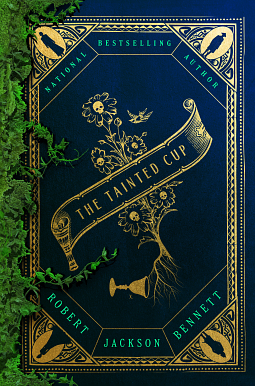
<p><em>The Tainted Cup</em> is the first in the <em>Shadow of the Leviathan</em> series by Robert Jackson Bennett, the third installment of which is due in 2026. This book had received some high praise and I was eager to read a fantasy mystery after I had enjoyed Josiah Bancroft’s <em>The Hexologists</em> and was awaiting the sequel.</p>

<p>The story focuses largely on Dinios Kol, someone physically altered to possess a perfect memory, who is now assistant to the famed eccentric detective Ana Dolabra. There’s been a strange murder - an imperial officer, killed when a tree sprouted from his body. Dolabra sends her assistant out to the crime scene to gather all the details, which he brings for her to make sense of. This, amid a backdrop of an empire in danger from enormous titans that emerge from the ocean to destroy civilization.</p>

<p>The mystery was a compelling driver - it builds to a satisfying climax and makes good use of the unique features of the fantasy world, Daretana, to keep the story engaging. The world, however, did not pop with vividness as much as I had hoped. The book is a page-turner, for sure, even at 400+ pages, and even though the world building is present, it’s a little on the tepid side. Not enough to keep me from wanting to read on, but enough that the setting didn’t hook me and draw me in. I knew more about the world than I felt or visualized.</p>

<p>It’s a better mystery/thriller than it is a fantasy novel, though the fantasy aspect does give the murder plot a more unique flavor. Plus, there’s a fair dose of character and wit. I don’t usually enjoy committing to a series, but the strength of this novel makes the sequel seem worth reading.</p>]]></content><author><name>John Gerace</name></author><category term="book review" /><category term="literature" /><summary type="html"><![CDATA[A surprising buddy cop, Holmes and Watson fantasy]]></summary></entry></feed>